
An essential for reducing sawdust mess and inhalation
I have been working in my cellar workshop quite a lot and have many sawdust-generating tools down there. So I decided for the sake of my lungs that I needed to create a dust extraction system. A bit of internet searching turned up two different styles – one totally homemade and one homemade with a purchased ‘cyclone’ on top. I put the two types together and have made myself a pretty good system, that has a good powerful suck and is very efficient. The great thing about having a cyclone system is that it creates a half-way break point between the floor and the hoover bag, so if you do accidentally suck up an important bolt or a screwdriver bit, you can retrieve it easily. The bad thing is that it takes quite a bit of trial and error to get the right sizes and configurations of the various pipes that you need.
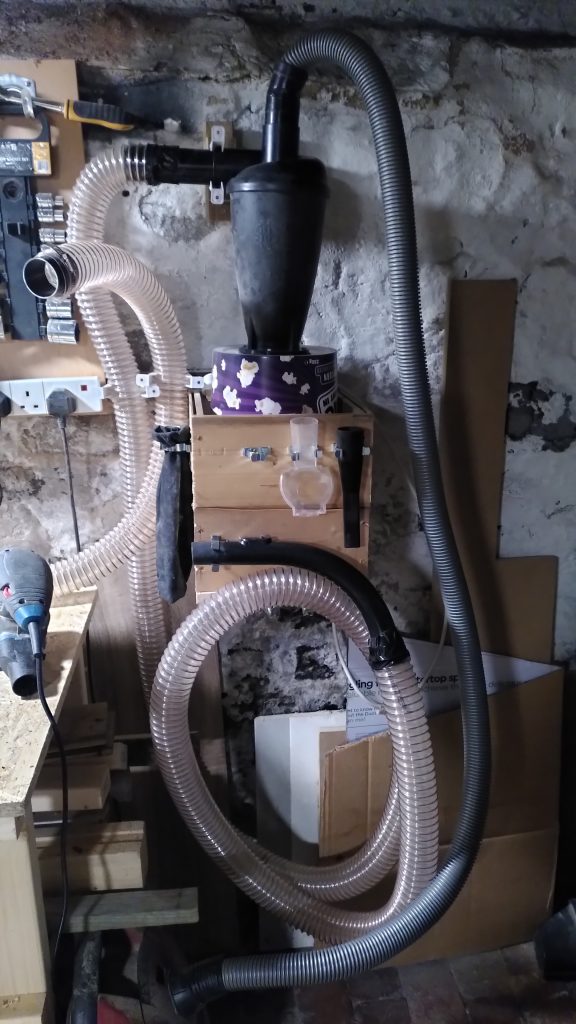
The bits I used
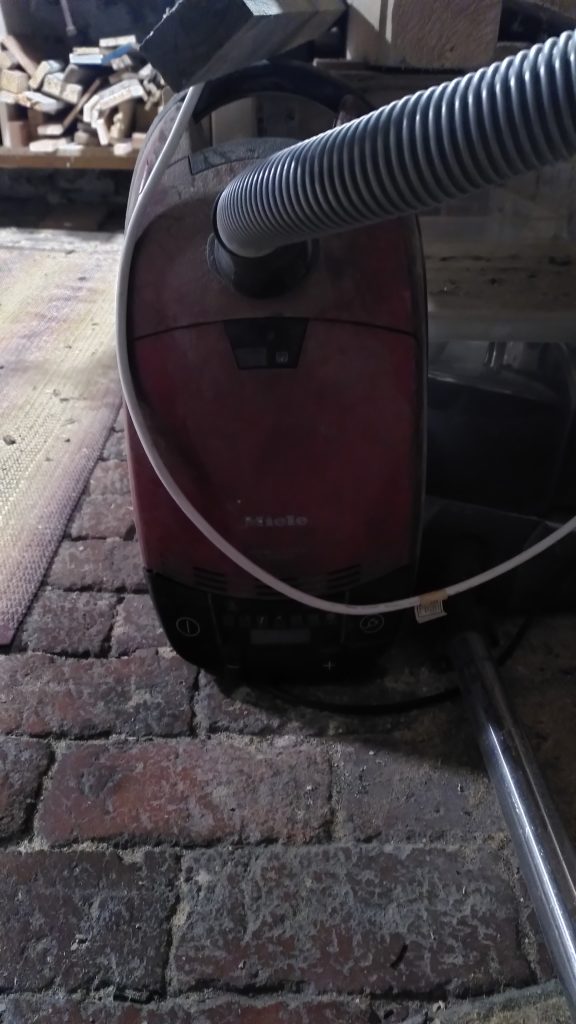
- An old hoover
- Two tubs whose tops fit together tightly. I already had two tubs that coincidentally fitted to each other – a popcorn tub and a ready-made grout tub. They’re not very sturdy but just about do the job. I turned the popcorn tub upside down and fortunately it fitted just on the outside of the lip of the grout tub. This meant that I effectively had a vessel that was airtight but would split into two. See what I mean about needing a very specific configuration??
- A 50mm cyclone kit from eBay for £15 – includes 50mm OD (outer diameter) connectors
- 2m and 4m lengths of 50mm ID (inner diameter) plastic reinforced hose, again from eBay.
- 50mm clips to attach the tubing to the wall to stabilise it
- Some 20mm floorboarding to make a box to contain the collector, plus 2 flat brackets to attach it to the wall
- Some 1.25″ tool clips to hold the various tool dust extractor connectors
The process
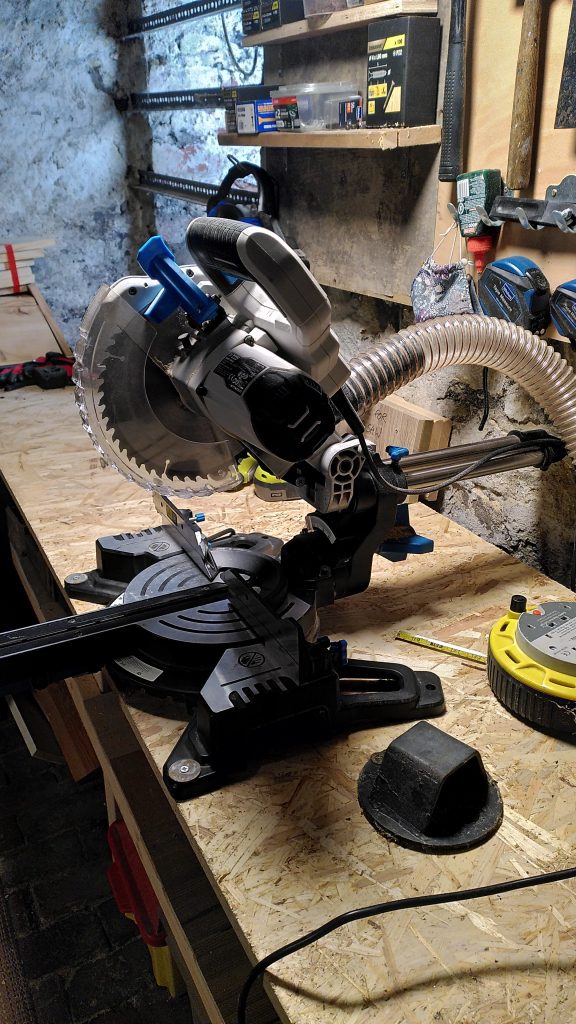
I made two tubes – one for a permanent connection to my chop saw, and one for a ‘roaming’ connection to the smaller tools. They can be changed over quickly at the cyclone inlet.
I attached the cyclone to the base of the upper tub, which would be removed to empty the lower tub. I used a soldering iron rather than scissors or a knife to cut out the hole for the cyclone, because I thought it would make the hole stronger (since the tubs aren’t very thick).
I made a wooden box to hold the two tubs so that moving the tubing didn’t make them fall over. I attached this via a baton to the wall. It also made a nice place to put the tool clips to hold the extraction attachments for each tool.
I put a hook on the underside of the box to hold the tubing when it wasn’t being used.
This has been a great addition to my workshop and I’ll be able to easily replicate it when we get the workshop up and running, so a very worthwhile project all in all.